Blog
Most health systems are buying AI tools and hoping for ROI. Hope isn't a strategy.
As health systems accumulate multiple AI subscriptions, CEOs, COOs, and CFOs will inevitably ask informatics and clinical leaders to demonstrate measurable ROI.

Most health systems are buying AI tools and hoping for ROI. Hope isn't a strategy.
There is a rapid push to adopt artificial intelligence across healthcare, from ambient clinical documentation and inbox management to chart review and clinical summarization.
These technologies are sure to be transformative. As health systems accumulate multiple AI subscriptions, CEOs and CFOs will inevitably ask informatics and clinical leaders to demonstrate measurable ROI. That return is often assumed to materialize in one of three ways:
- Operational efficiency: Workflow improvements that translate into reduced length of stay, improved throughput, or lower labor costs
- Revenue optimization: More complete documentation leading to higher or more accurate billing
- Capacity expansion: Clinicians use time savings to see more patients
Each of these ROI assumptions deserves scrutiny.
Ask anyone who’s done real quality improvement work: broad workflow interventions almost never deliver meaningful results. Non-specific tools rarely lead to sustained reductions in length of stay or patient outcomes without tightly coupled process redesign and accountability.
Those with experience in billing and coding recognize a similar challenge. Revenue optimization is an arms race: when documentation improves and average charges rise, payers quickly respond by increasing scrutiny, adjusting benchmarks, or narrowing coverage policies. Documentation improvements rarely produce lasting margin gains.
And for employed clinicians, time savings do not reliably convert into expanded schedules. Burnout, work-life balance, and administrative burden all shape clinician behavior, and most do not willingly trade reclaimed time for higher visit volumes.
This does not mean AI lacks ROI. It means leaders must seek ROI deliberately, designed into implementations from the start, not treated as an afterthought. Most health systems are buying AI tools and hoping for ROI. Hope isn't a strategy.
If AI can listen to a visit and transcribe, it is merely a glorified scribe. If AI can listen, interject, suggest hypotheses, or suggest reasonable alternatives, then it unlocks tremendous potential.
AI has the potential to move care closer to guideline-based practice, reduce low-value testing, and steer care to the most appropriate—and cost-effective—settings.
The only thing that remains is to make sure AI understands your strategic priorities.
Examples we dive into in our new playbook to get value from clinical decision support include:
- Encouraging outpatient rather than hospital-based diagnostics when clinically appropriate
- Improving adherence to evidence-based pathways
- Supporting earlier discharge planning and post-acute coordination
At Phrase Health, we're helping organizations manage the immense decision support content in their EHR. We're creating a knowledge layer that can allow AI to suggest more guideline-concordant and cost-conscious care.
Download a copy of our playbook addressing how health systems can better curb clinical variation, which drives $75-101 billion in annual waste through inconsistent EHR workflows, extended length of stay, and unnecessary testing.
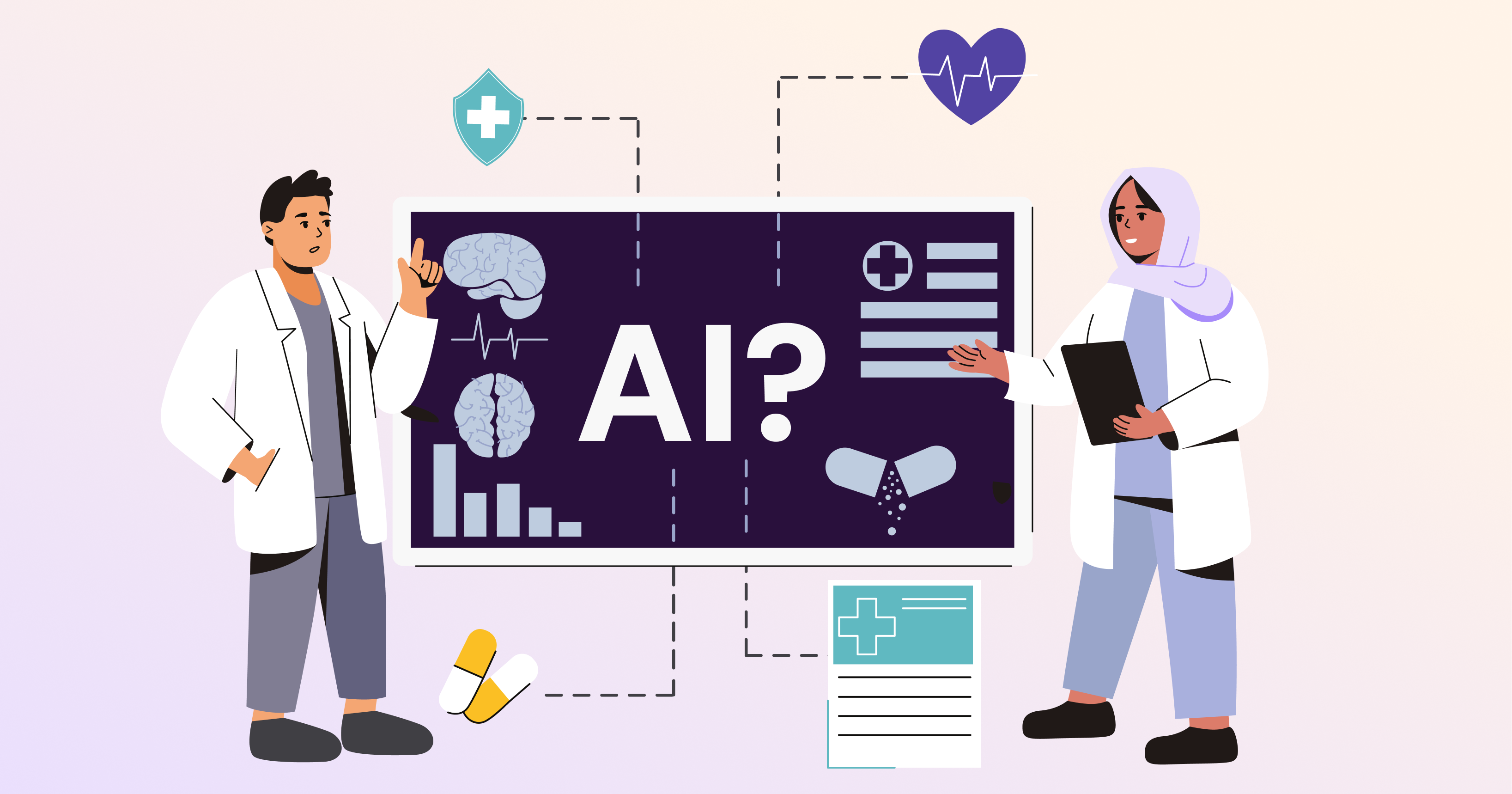
Image by FreePik
As health systems accumulate multiple AI subscriptions, CEOs, COOs, and CFOs will inevitably ask informatics and clinical leaders to demonstrate measurable ROI.

Written by
David Do, MD
Jan 26, 2026
Written by
David Do, MD
Jan 26, 2026
There is a rapid push to adopt artificial intelligence across healthcare, from ambient clinical documentation and inbox management to chart review and clinical summarization.
These technologies are sure to be transformative. As health systems accumulate multiple AI subscriptions, CEOs and CFOs will inevitably ask informatics and clinical leaders to demonstrate measurable ROI. That return is often assumed to materialize in one of three ways:
- Operational efficiency: Workflow improvements that translate into reduced length of stay, improved throughput, or lower labor costs
- Revenue optimization: More complete documentation leading to higher or more accurate billing
- Capacity expansion: Clinicians use time savings to see more patients
Each of these ROI assumptions deserves scrutiny.
Ask anyone who’s done real quality improvement work: broad workflow interventions almost never deliver meaningful results. Non-specific tools rarely lead to sustained reductions in length of stay or patient outcomes without tightly coupled process redesign and accountability.
Those with experience in billing and coding recognize a similar challenge. Revenue optimization is an arms race: when documentation improves and average charges rise, payers quickly respond by increasing scrutiny, adjusting benchmarks, or narrowing coverage policies. Documentation improvements rarely produce lasting margin gains.
And for employed clinicians, time savings do not reliably convert into expanded schedules. Burnout, work-life balance, and administrative burden all shape clinician behavior, and most do not willingly trade reclaimed time for higher visit volumes.
This does not mean AI lacks ROI. It means leaders must seek ROI deliberately, designed into implementations from the start, not treated as an afterthought. Most health systems are buying AI tools and hoping for ROI. Hope isn't a strategy.
If AI can listen to a visit and transcribe, it is merely a glorified scribe. If AI can listen, interject, suggest hypotheses, or suggest reasonable alternatives, then it unlocks tremendous potential.
AI has the potential to move care closer to guideline-based practice, reduce low-value testing, and steer care to the most appropriate—and cost-effective—settings.
The only thing that remains is to make sure AI understands your strategic priorities.
Examples we dive into in our new playbook to get value from clinical decision support include:
- Encouraging outpatient rather than hospital-based diagnostics when clinically appropriate
- Improving adherence to evidence-based pathways
- Supporting earlier discharge planning and post-acute coordination
At Phrase Health, we're helping organizations manage the immense decision support content in their EHR. We're creating a knowledge layer that can allow AI to suggest more guideline-concordant and cost-conscious care.
Download a copy of our playbook addressing how health systems can better curb clinical variation, which drives $75-101 billion in annual waste through inconsistent EHR workflows, extended length of stay, and unnecessary testing.
Image by FreePik
.svg)
.svg)